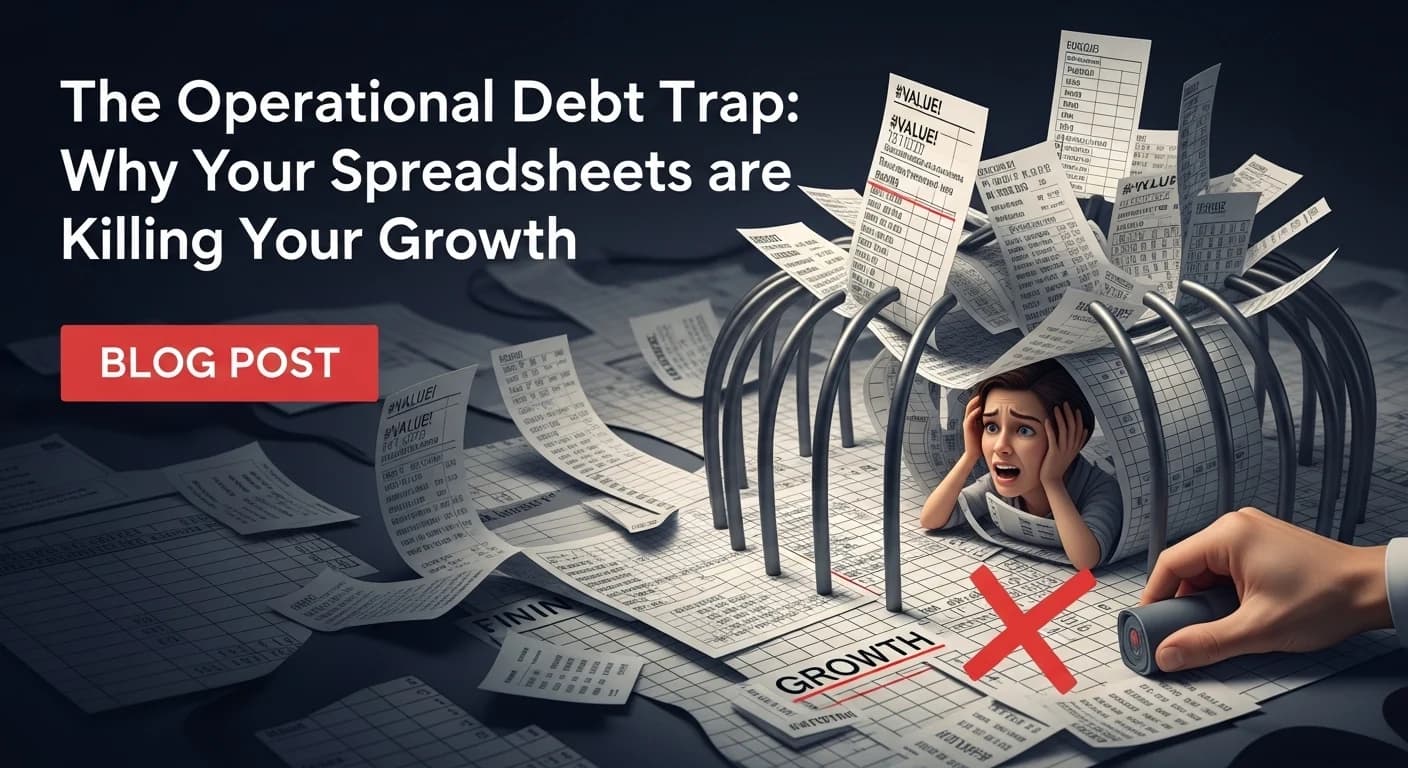
Operational debt occurs when manual workarounds—like complex spreadsheets—create hidden labor costs and data silos. For South African businesses, this "spreadsheet sprawl" can increase operational costs by up to 40% and lead to significant POPIA and SARS compliance risks.
What is the Operational Debt Trap?
The Operational Debt Trap is a cycle where a business relies on manual processes (typically Excel or Google Sheets) to save money upfront, only to pay a much higher "interest rate" later in the form of wasted labor hours, human error, and a lack of scalability.
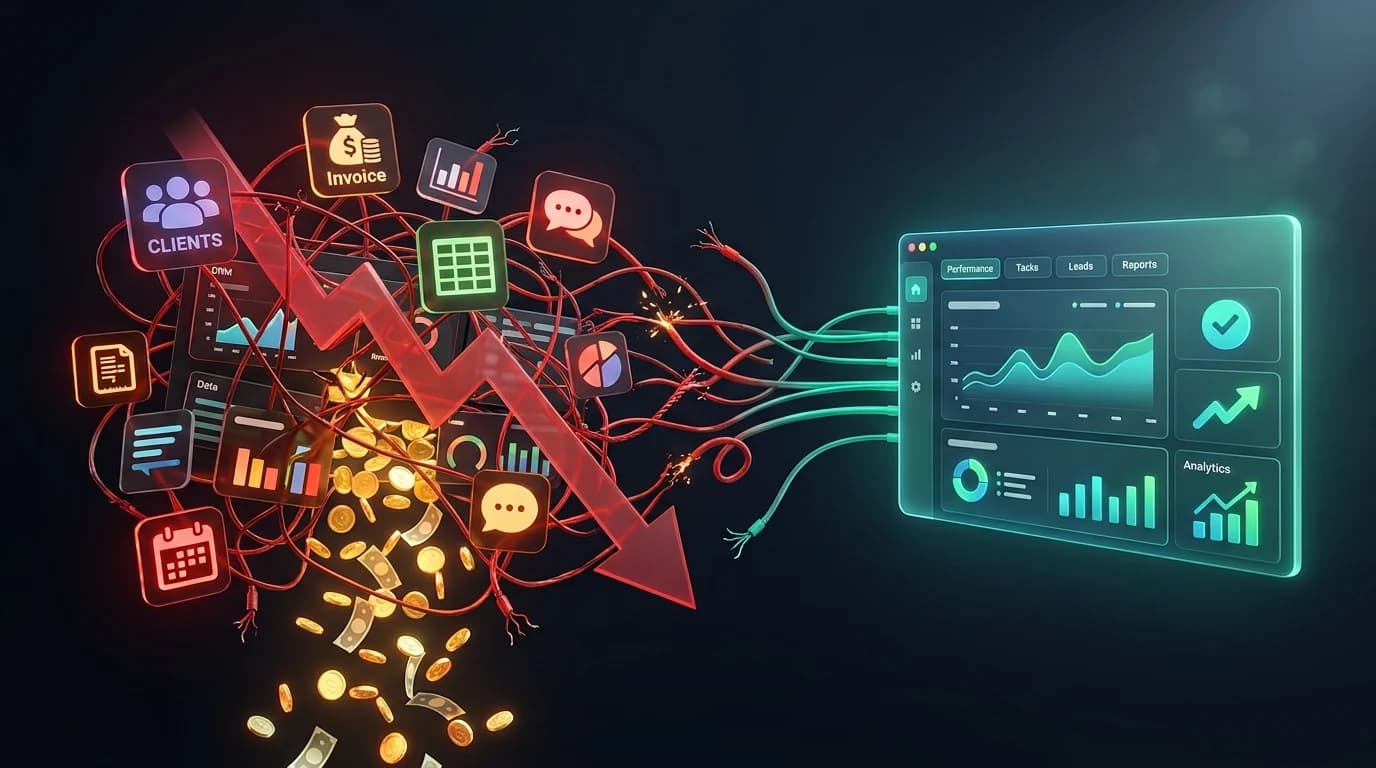
In South Africa, where administrative efficiency is key to staying competitive, this trap often manifests as "spreadsheet sprawl"—where crucial company data lives in isolated files that don't talk to each other.
5 Ways Spreadsheets are Costing Your Business
1. The Hidden Labor Cost
Most business owners overlook the time staff spend on "data janitoring."
The Reality: According to industry benchmarks, finance and ops teams spend up to 60% of their time simply moving data between sheets.
The Math: If a manager earning R40,000/month spends 10 hours a week fixing broken formulas or reconciling reports, you are losing R120,000 per year in unproductive labor on just one person.
2. POPIA and Security Risk
Under the Protection of Personal Information Act (POPIA), South African businesses are legally required to secure personal data.
Spreadsheets are often emailed, stored on unencrypted local drives, or shared without audit trails. A single "accidental delete" or a leaked file can lead to fines and reputational damage. In a platform like Syniq Business OS, roles, business units and two-factor sign-in keep those records out of inboxes and attachments.
3. SARS Compliance and Audit Bloat
When your financial records depend on manual entry, the risk of "vouching" errors during a SARS audit increases. Spreadsheets lack a definitive Audit Trail, making it difficult to prove who changed what and when, leading to longer, more expensive audits.
4. Single Point of Failure
Many SA SMEs have "that one person" who understands how the master spreadsheet works. If that person leaves, goes on leave, or gets sick, the business's ability to invoice, track inventory, or manage staff grinds to a halt.
5. Lack of Real-Time Decision Making
In a fast-moving market, waiting for a "Month-End Close" that takes two weeks because of manual reconciliations means you are always making decisions based on old data.
The Solution: From Operational Debt to Digital Equity
The solution to operational debt isn't just "better spreadsheets"—it's centralization. Here's how Syniq transforms your operations:
| Challenge | Manual Spreadsheets | Syniq Solution |
|---|---|---|
| Data Management | Isolated silos across multiple files | Single source of truth |
| Accuracy | High error risk from manual entry | VAT and totals calculated for you |
| Security | Email attachments, anyone can open them | Roles, business units and two-factor sign-in |
| Decision Making | Reactive, outdated reports | Real-time dashboards |
| Scalability | Breaks down as you grow | Built to scale with your business |
Frequently Asked Questions
How do I know if my business is in an operational debt trap?
If your team spends more time updating reports than acting on them, or if you have multiple versions of the "Final_Final" spreadsheet, you are likely in the trap.
Is custom software more expensive than Excel?
While Excel feels "free," the Total Cost of Ownership (TCO)—including labor hours and error costs—is almost always higher than a streamlined SaaS subscription like Syniq.
Can Syniq integrate with my existing data?
Yes. Business OS imports your client list from a spreadsheet, and for anything larger our custom software team can plan the migration so you don't lose your history.
Take Action Today
Don't let manual processes be the ceiling of your success. Syniq helps South African businesses move their operations off spreadsheets and into one system.
Ready to break free from operational debt? Explore Syniq Business OS or contact us to discuss your digital transformation journey.